
This is unpublished
christoph
News

Christoph Grundner, PhD, SEATRAC Basic Science Core Co-Lead, reflects on his grandfathers work in a Berlin tuberculosis sanatorium.

August 7, 2026

Christoph Grundner
Pinned
Back to top

This essay originally appeared on Los Angeles Review of Books. 

In this essay, Christoph Grundner, PhD, SEATRAC Basic Science Core Co-Lead, reflects on the history of tuberculosis treatment, connecting his grandfather’s work in a Berlin tuberculosis sanatorium during World War II with today’s reality of multi-drug-resistance.

HEALTHY LUNGS ARE pink and elastic, and more sponge than flesh. Suspended in the chest cavity by the negative pressure of the sealed pleural space, they collapse if that seal is broken. This is why surgeons have long avoided operating inside the chest. Yet what would be a catastrophe in any other setting was precisely the point of tuberculosis therapy.


My grandfather was a tuberculosis doctor in a lung sanatorium in Berlin during World War II, a time when Germany was running out of everything—except sick people. Berliners called tuberculosis “die Motten” (the moths) because the disease ate through people’s lungs as if through an old coat. It did not spare its doctors either. During his training to become a general surgeon, my grandfather contracted the disease himself. After his diagnosis, he could work only in a tuberculosis sanatorium where everyone else was already sick—a doctor undone by his patients. There, his surgical skills were needed: at the time, chest or thoracic surgery was the only viable treatment.


Surgeons developed a whole repertoire of procedures to collapse or remove lungs affected by tuberculosis. Resections removed a piece, a lobe, or an entire lung, and with it, the necrotic tissue thickest with bacteria. Collapse therapy was a collection of different treatments to constrict lung volume and movement. The most common was the artificial pneumothorax, the insertion of nitrogen gas into the pleural space to displace the lungs. The most radical was thoracoplasty, which removed ribs to collapse the chest wall into the lungs—a disfiguring surgery of last resort. Another approach was plombage, using packing material between the rib cage and the infected lung. The choice of materials—mineral oils and paraffin wax, rubber sheets and balloons—seemed to have been guided not by textbooks but by expediency. Later, plexiglass had its moment. Some surgeons tried Ping-Pong balls.


These controlled versions of the disease’s own destruction often followed one another, each struggling to overcome the same paradox: both the bacterium and the patient required oxygen, and to starve one was to starve the other. The surgeries were difficult under any circumstances. In my grandfather’s papers was a draft that described the added challenges of wartime surgery. In slightly jumbled letters, typed out on pages that are yellowing now, he described how his patients’ hunger and exhaustion complicated the procedures he called “große Lungenchirurgie” (big lung surgery). For his patients to pull through, he needed to stage surgery, removing ribs only one or two at a time, with intermittent days of rest and food.


In his 1924 novel The Magic Mountain (trans. H. T. Lowe-Porter, 1927), Thomas Mann captured the disease in a single sound:


It was coughing, obviously, a man coughing; but coughing like to no other Hans Castorp had ever heard, and compared with which any other had been a magnificent and healthy manifestation of life: a coughing that had no conviction and gave no relief, that did not even come out in paroxysms, but was just a feeble, dreadful welling up of the juices of organic dissolution.


My grandfather knew this sound well, though it was often muffled by a city undergoing its own dissolution as the Allies dismantled Berlin from above. Amid the rubble, he managed two pathologies: tuberculosis and the cruelty of a regime that decided who should and should not be treated. That regime had replaced the individual patient at the center of medicine with the Volksgesundheit, the people’s health, but really, the health of the state. Open tuberculosis became a political as much as a medical liability.


A photograph shows my grandfather sitting in a sparse treatment room facing a wooden cabinet holding vertical gauges, tubing, and a metal cylinder—a pneumothorax or Forlanini apparatus. A patient is propped up sideways facing him; my grandfather is inserting a tube from the apparatus into the chest cavity with one hand, watching the pleural pressure on the manometer, the other hand steadying the patient. An artificial pneumothorax required regular maintenance because the gas slowly dissipated over time, which allowed the collapsed lung and, with it, the bacteria to regain purchase.


My grandfather’s calm expression belies the fraught relationship he must have had with this procedure. Once the staff left for the day, he often returned to the hospital, now darkened by nightfall and mandated blackouts as the city braced for air raids. Walking through the long birch-lined alley leading to the building, the white bark like parchment pale in the darkness, he returned to the same apparatus to adjust the pressure in his own chest—an exercise as precarious as it was lonely. Only my grandmother knew he was sick. He was not the only one; others, who were not meant to be treated any longer, also came in the dark.


christoph

The last photograph of the author and his grandfather, Niederweimar, Germany, 1973. Courtesy of the author.


I never knew my grandfather; he died before I could form my own memories. I know him only through photographs, some papers, and my mother’s vivid memories. I learned of his work much later when I was a microbiologist working on the same disease, perhaps guided by some undertow across the decades. In the last photograph of us together, he holds me, a one-year-old, in the crook of his left arm, the two of us looking into the distance through the backlit picture windows of my childhood home.


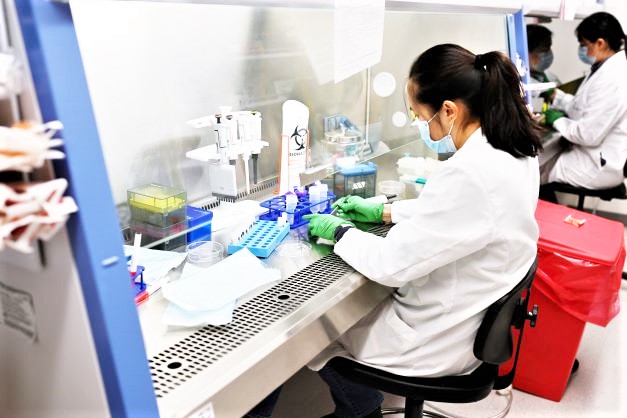
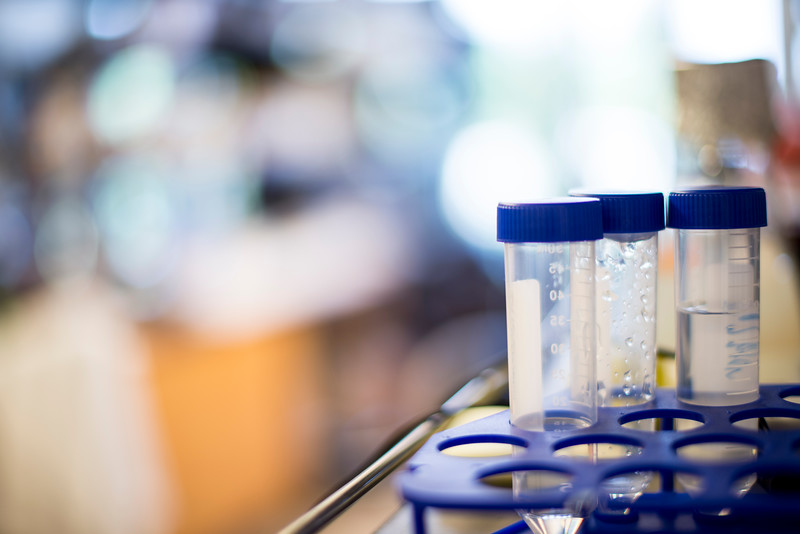
Tuberculosis runs down my paternal line in other ways. My father, too, had it as a child, and it returned in my life not as disease but as vocation, although my work and my grandfather’s could not be more different. His was macroscopic, visceral, carried out with rib shears in the operating room; mine is nanoscopic, abstract, conducted with molecular tools in a lab with electronic equipment softly humming, only occasionally interrupted by the whir of a centrifuge. My work is at a scale that would have been unknown to him. A few changes in the 4.4 million nucleotides that make up the bacterium’s chromosome are enough to change the trajectory of a patient’s life from cure to unending treatment. These mutations, fixed in the genome, travel down a bacterial lineage, sometimes infecting whole families.


Long gone are the tuberculosis sanatoriums of The Magic Mountain, its crowded wards in Davos, Switzerland, now converted into luxury hotels. The patients spitting into their Blauer Heinrich—a cobalt blue glass bottle issued to every patient—have been replaced with tourists sipping Aperol Spritz. My grandfather’s sanatorium has been razed and replaced with apartment buildings, its only vestige a bus stop by the same name, Birkenhaag—Birch Grove.


Lung surgery for tuberculosis all but disappeared with the arrival of antibiotics, but chemical tuberculosis treatment is still long and complicated. Drug resistance followed on the heels of the first antibiotics and has only grown worse. For patients with multidrug-resistant tuberculosis (MDR-TB), treatment is even longer, more toxic, and less effective, and it often fails entirely. A recently introduced regimen for MDR-TB includes, for the first time since the 1960s, two new types of medication that dramatically shorten treatment. And yet, already during clinical trials of one of the drugs, bedaquiline, resistance emerged. The spread of bedaquiline resistance is now anxiously monitored as the new therapy rolls out.


A study from a hospital in Tbilisi, in the former Soviet republic of Georgia, recently caught my eye—it described the use of human lung samples from MDR-TB patients. Such samples are not unusual; they are used by researchers to answer questions about the disease and are typically taken after the patient has died. These were taken before: they were biopsies from patients who were very much alive, from lung resections in which the chest cavity was opened and pieces of the lung were excised—a practice I thought belonged to my grandfather’s world, not mine.


gg

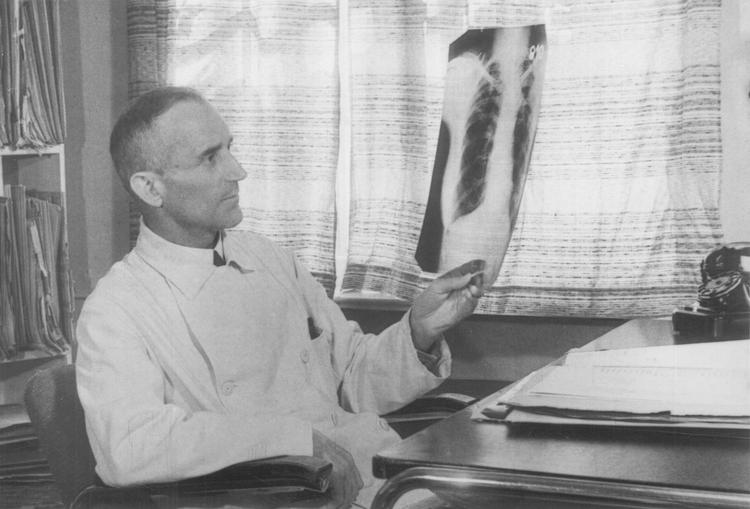
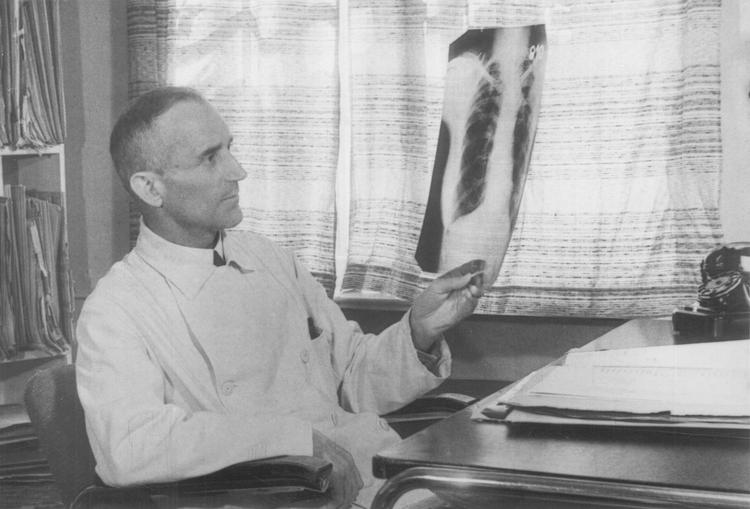
Dr. Georg Grundner holding a chest radiograph, Birkenhaag sanatorium, Berlin, ca. 1940s. Courtesy of the author.
 

Surgery has made a quiet return. And not just in Tbilisi; Ho Chi Minh City, Vietnam; Manila, Philippines; and many other places with high rates of MDR-TB. For some of these patients who can’t be cured with drugs alone, the future of tuberculosis treatment increasingly looks like its past.


Another photograph sits on my desk. My grandfather, at his desk, holds an X-ray of a lung with the radiological signs of tuberculosis—the white specks of granulomas. His hair is cropped short, his face drawn and pensive, his gaze fixed somewhere beyond the X-ray.


When chemistry fails, the lung again is cut away.

Christoph Grundner is a professor of pediatrics, microbiology, and global health at the University of Washington, Seattle. His grandfather was chief physician of the Birkenhaag tuberculosis sanatorium in Berlin.


News Categories

Recent News

hill day
3 months 1 week ago
TB Hill Day - An Advocate's Experience
Pragnya
samples
4 months 2 weeks ago
SEATRAC member developed rapid TB testing technique endorsed…